
Hospital EVS technicians: The unsung heroes fighting infections and saving lives
High-stakes hygiene: In a hospital, health starts from the floor up.
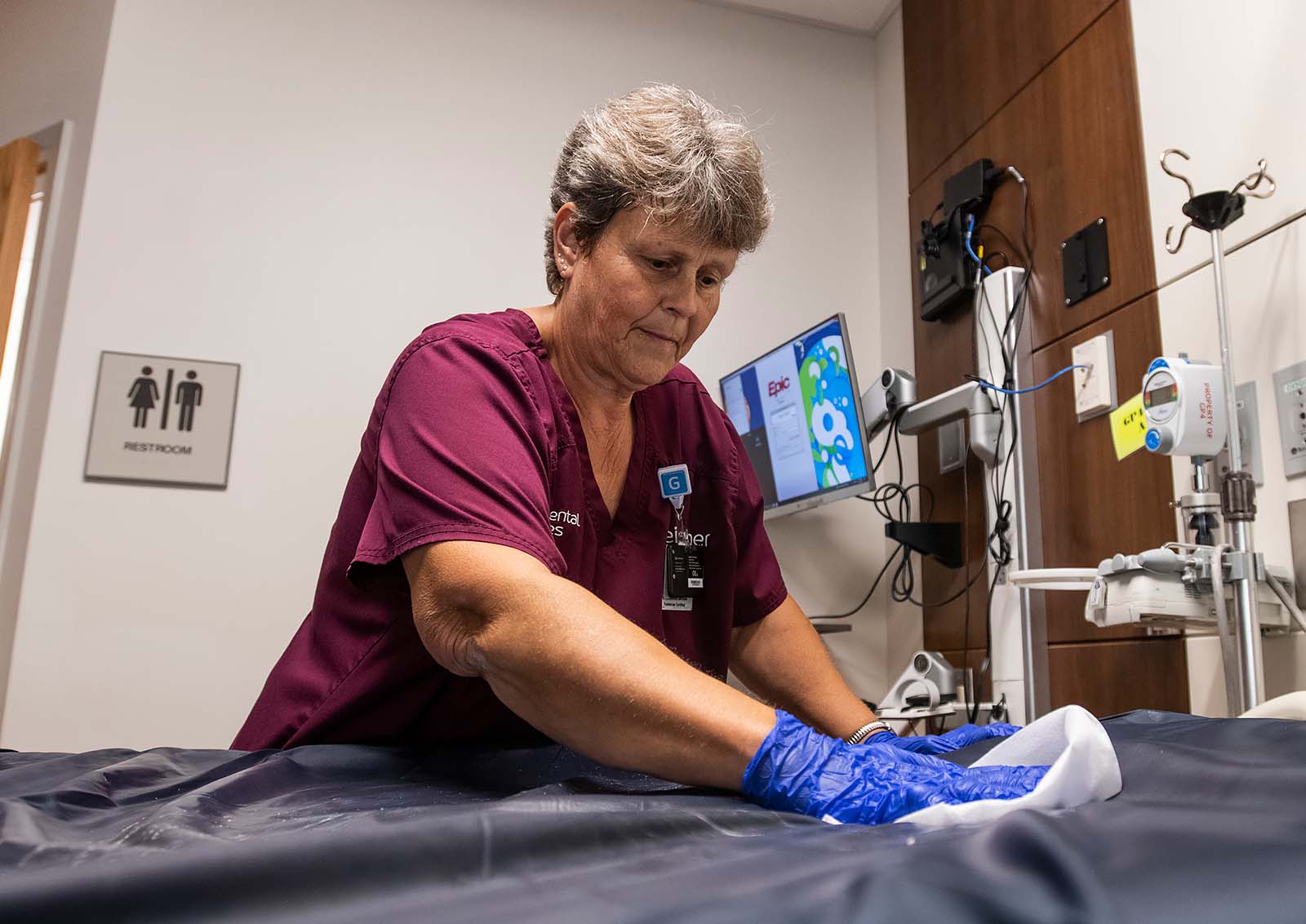
When you walk into a hospital, you'll see gleaming floors and spotless rooms. Behind that shine is a Geisinger team of professionals whose work is critical to patient health: environmental services (EVS) technicians. They don’t just clean — they protect patients from infections by keeping everything as germ-free as possible.
“We’re not just housekeepers. We take care of the entire environment of care,” says Lura Spriggs, supervisor of environmental services at Geisinger Lewistown Hospital. Her team’s responsibilities go far beyond sweeping. They disinfect patient rooms, manage supplies and even handle sensitive materials like patients’ personal belongings after discharges — all while maintaining strict infection control protocols. The stakes are high. Hospitalized patients are more vulnerable to infections, and EVS technicians are the first line of defense. Joan Barnett, a third-shift EVS supervisor at Geisinger Community Medical Center in Scranton, emphasizes this point: “We’re a key part in patients getting better. If there is no clean environment, the patient is susceptible to infection.”
Technology meets expertise
At Geisinger, EVS teams now use advanced tools like ultraviolet (UV) disinfection devices, which kill pathogens invisible to the naked eye. The UV light in a germicidal wavelength breaks down the DNA of microorganisms, rendering them harmless. It kills 99.9% of bacteria, mold spores, algae, protozoa, viruses and yeasts. After a 2-step manual cleaning with hospital-grade disinfectants, these devices add an extra layer of protection against dangerous bacteria like Clostridioides difficile, or C. diff. “It’s a game changer for the department and facility,” says Mrs. Spriggs. The process is meticulous — correctly placing sensors, controlling the devices by a tablet and following safety protocols allows thorough disinfection of a patient room without risk to staff or patients.
Training and professionalism
Becoming an EVS technician isn’t as simple as knowing how to mop a floor. New hires undergo 4 to 6 weeks of training, including online modules, hands-on practice and competency assessments. Technicians are instructed to treat each patient room as if they were in the patient’s home. They explain what they’ll be doing and ask permission. When they finish their tasks, they ask the patient if they need anything. If so, the EVS technician relays that information to a nurse for follow-up. Many pursue advanced certifications like the CHEST (Certified Healthcare Environmental Services Technician) credential, which focuses on infection prevention and environmental safety. CHEST is a national certification and is recognized everywhere in the United States.
More than cleaning
EVS technicians often work under intense pressure — turning over dozens of rooms in a single shift, responding to emergency spills and supporting surgical teams. During COVID-19, their role became even more critical. “COVID was like a war zone,” recalls Ms. Barnett. Enhanced cleaning protocols, personal protective equipment requirements and constant updates became the norm, all while many staff members fell ill themselves. Despite their essential role, EVS technicians are often overlooked as critical hospital employees. Ms. Barnett advocates for her team: “People take EVS technicians for granted, but it’s a very important job.” From operating rooms to waiting areas, their work directly impacts patient outcomes.
The heart of hospital safety
Every sanitized surface, every disinfected room, every stocked supply cart represents the dedication of EVS professionals. As Mrs. Spriggs puts it, “If it’s in the care environment, we’re doing it. An EVS technician is just as important as a nurse.” So the next time you walk through a hospital, remember: The clean, safe environment around you is no accident. It’s the result of skilled, committed EVS technicians whose work protects people’s lives.

Photo provided by Steriliz LLC.
Recognizing excellence in EVS safety
Geisinger’s environmental services teams don’t just meet industry standards — they set them. Their commitment to patient safety and innovation has earned national recognition:
- State-of-the-art technology: Introduced advanced UV disinfection devices systemwide that kill 99.9% of harmful pathogens by breaking down their DNA.
- National honors: Geisinger Medical Center (Danville) and Geisinger Bloomsburg Hospital have both earned Certificates of Merit from the Association for the Health Care Environment as part of the prestigious Environmental Services Department of the Year award. This honor celebrates outstanding achievements in infection prevention, sustainability, patient satisfaction and technology use.
- Innovative training: Piloted virtual reality training to enhance EVS team skills and competency, making sure staff are prepared for the most rigorous infection control standards.
- Zero MRSA rate: Geisinger Lewistown Hospital achieved a zero rate of MRSA (methicillin-resistant Staphylococcus aureus) bloodstream infections, according to data from the Centers for Medicare & Medicaid Services — a remarkable milestone in patient safety and infection control.
This story originally appeared in the spring issue of PA Health, our quarterly full-color magazine filled with wellness tips, inspiring stories and more.
Sign up to have PA Health sent to your mailbox or inbox 4 times a year, for free.